

Keywix: Your Shield Against the $4.44 Million Data Breach Reality
Why Every Business Leader Must Act Now
Skip to the topics most critical for your business:
Discover the escalating threat landscape – Learn how 1,113 data breaches in Australia alone during 2024 are costing businesses millions and endangering customer trust.
Understand the real business impact – See why healthcare breaches now cost $9.77 million per incident, while financial services face 27% of all global breaches.
Explore Keywix’s IdentityAI – Learn how this privacy-first platform eliminates data harvesting risks while providing enterprise-grade communication tools.
See the eight-week transformation plan – Get actionable steps for implementing user-controlled identity across your organisation’s communication channels.
Calculate your protection ROI – Understand how proactive identity management delivers measurable returns compared to post-breach recovery costs.
The $4.44 Million Wake-Up Call: Why Data Breaches Are Every CIO’s Nightmare
The statistics are staggering and getting worse. In 2024, businesses globally faced an average data breach cost of $4.44 million, with some sectors experiencing far higher losses. Australian organisations alone reported 1,113 data breaches in 2024, representing a 25% increase from the previous year. But these numbers only tell part of the story.
The Hidden Costs Beyond the Headlines
When a major airline recently experienced a data breach affecting over 5 million customers, the immediate fallout went far beyond the initial security incident. Customer trust evaporated overnight, operational systems required a complete overhaul, and regulatory penalties mounted quickly. The real damage wasn’t just the stolen data—it was the months of customer service calls, system rebuilds, and reputation management.
Healthcare organisations face the steepest financial impact, with breaches averaging $9.77 million per incident. One major health insurer’s breach exposed 12.9 million Australians’ personal information, including Medicare numbers and prescription details. Financial services aren’t far behind, with the sector now accounting for 27% of all global breaches.
Why Traditional Security Isn’t Working
The problem isn’t just external threats. Human error contributes to 60% of all breaches, while third-party vulnerabilities account for another significant portion. Traditional security models assume data will be distributed amongst several SaaS systems and protected by perimeter defences. But modern business reality involves remote work, legacy systems, cloud services, and countless third-party integrations—each creating potential weak points.
A major construction company recently lost 350GB of data, including employee records and engineering documents. The breach occurred not because their security was weak, but because their approach was fundamentally outdated. They were protecting castles in an age of mobile armies.
The Privacy-First Revolution: How Smart Organisations Are Fighting Back
The most successful organisations aren’t just building higher walls—they’re rethinking the entire approach to data protection through privacy-first architecture. This means putting user control at the centre of every data decision, rather than hoping systems built to duplicate user data will keep information safe.
Keywix: The Business Case for Privacy-First Communication
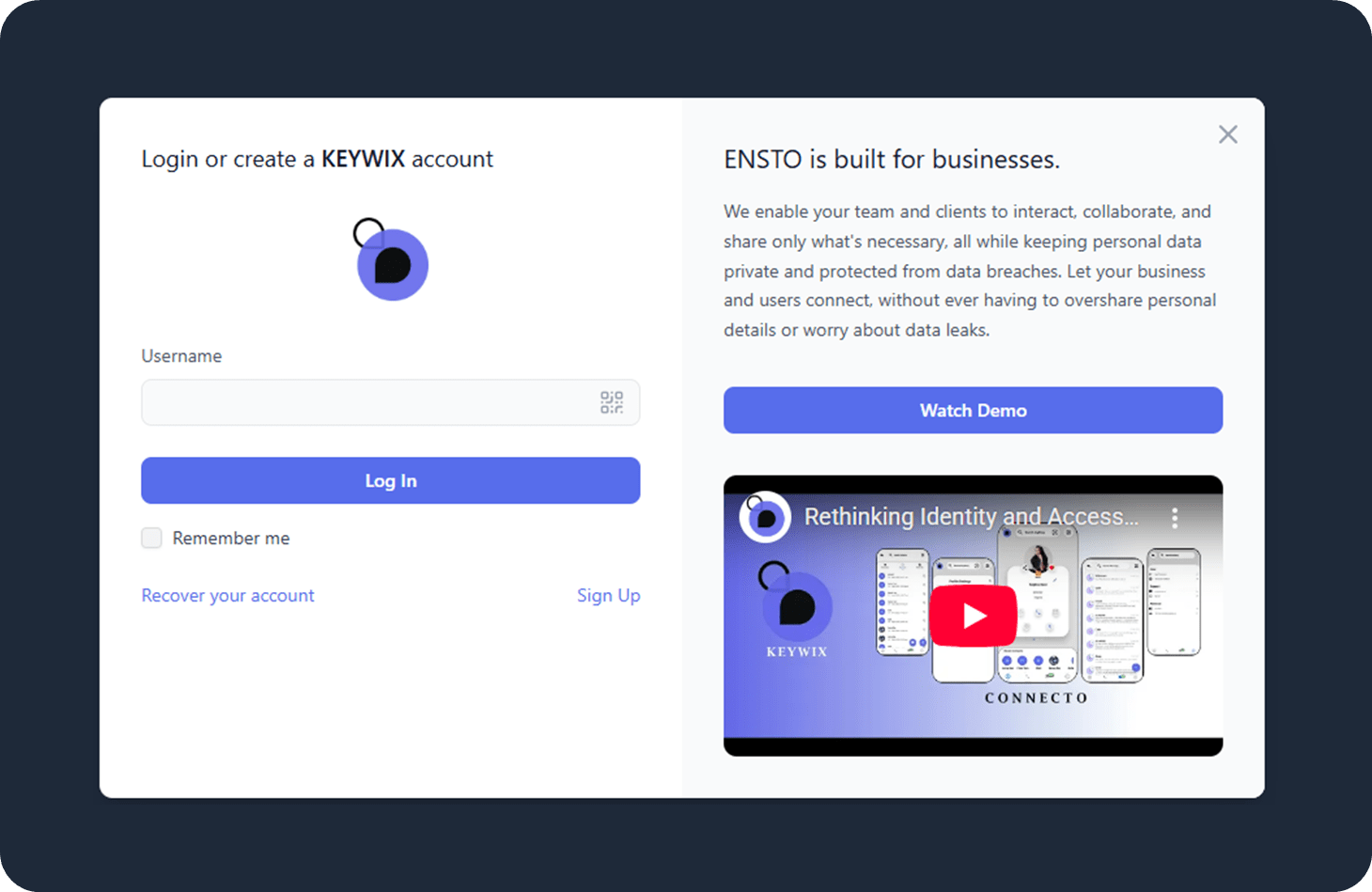
Keywix eliminates the costly cycle of data duplication across your software stack. Instead of maintaining user information in dozens of different platforms—each creating another security vulnerability and compliance headache—organisations can centralise communication through a single privacy-first platform. This approach transforms scattered data liabilities into a unified, user-controlled asset, dramatically reducing your attack surface while simplifying regulatory compliance and cutting IT management overhead.
The business impact is immediate: IT teams stop managing user data across multiple systems, compliance teams get automatic audit trails, and security teams monitor one communication channel instead of dozens. Most importantly, when users control their own data sharing, your organisation eliminates the legal and financial exposure that comes from storing customer information you don’t actually need to hold.
The Eight-Week Implementation Framework
Week 1: Assessment Phase
Evaluate current communication vulnerabilities and data exposure points. Most organisations discover they have user data scattered across dozens of systems they weren’t fully aware of.
Week 2: Pilot User Group
Begin with executive communications and high-value targets. These users typically handle the most sensitive information and benefit most from enhanced protection.
Week 3-4: First-Department Rollout
Expand to one or more departments handling sensitive data—HR, Finance, Ops. These groups immediately understand the value of user-controlled communication.
Week 4-6: Pilot External Communication
Implement for customer and vendor communications. This is where organisations often see the biggest immediate risk reduction.
Week 6-7: Integration Planning
Connect with existing business systems through secure APIs, maintaining the privacy-first approach throughout.
Week 8: Training and Adoption
Roll out user training focused on the business benefits rather than technical features. Users who understand why they’re in control adopt faster.
The Dark Web Reality: Why Your Customer Data Is Already at Risk
The most sobering reality facing business leaders today is that customer data breaches aren’t just possible—they’re probable. Recent analysis of dark web marketplaces shows stolen identity information from healthcare providers, airlines, and financial institutions being sold within hours of major breaches.
The Multiplication Effect of Data Breaches
When customer information appears on the dark web, the damage multiplies exponentially. A single breach doesn’t just affect the original organisation—it enables fraud across the entire digital ecosystem. Customers whose airline frequent flyer data was stolen find themselves targeted by sophisticated phishing attacks months later, using their personal details to create convincing fake communications.
Financial services face particularly severe consequences. Banking data breaches provide criminals with everything needed for account takeovers, fraudulent transactions, and identity theft. The stolen information isn’t just used once—it becomes part of criminal databases used for years of ongoing fraud.
The Enterprise Security Ecosystem: How Keywix Integrates
Smart organisations understand that security tools must work together seamlessly. Keywix’s privacy-first architecture integrates naturally with existing enterprise security investments rather than requiring wholesale replacement of current systems.
Seamless Integration Points
Identity Management Systems: Connecto works alongside existing IAM platforms by providing the communication layer that respects user identity controls. Instead of bypassing existing identity systems, it extends them into communication workflows.
SaaS, Security Information and Event Management (SIEM): While Keywix reduces the amount of security data that needs monitoring, it integrates with SaaS and SIEM systems to provide visibility into communication patterns without compromising user privacy.
Compliance Management: Connecto’s user-controlled data model automatically generates audit trails that satisfy regulatory requirements without manual intervention from compliance teams.
The API-First Business Advantage
Organisations using API-first communication platforms can integrate identity controls directly into business workflows. Customer service representatives, for example, can initiate secure communications without accessing centralised customer databases. Sales teams can share proposals and contracts while maintaining complete audit trails of who accessed what information when.
This approach eliminates many of the permission management headaches that plague traditional communication systems. Instead of IT teams managing complex access controls, users make sharing decisions in real-time based on their current business needs.
ROI Analysis: The True Cost of Doing Nothing
When calculating the business case for privacy-first communication, organizations must consider both the cost of implementation and the cost of maintaining vulnerable legacy systems.
The Hidden Costs of Traditional Systems
Most organisations underestimate the true cost of their current communication security approach:
Data Discovery and Mapping: Regulatory compliance requires knowing where user data is stored and how it’s used. This creates enormous ongoing costs for organisations using traditional centralised systems.
Incident Response: When breaches occur in traditional systems, organisations must assume the worst about data exposure because they can’t track individual user consent and sharing decisions.
Reputation Recovery: Organisations experiencing data breaches face years of reputation management costs as they work to rebuild customer trust.
Calculating Your Protection Investment
The business case for Connecto becomes clear when organisations calculate their current risk exposure:
- Average data breach cost: $4.44 million globally
- Healthcare sector average: $9.77 million per incident
- Time to identify and contain breaches: 241 days average
- Regulatory fines: Often exceed $1 million for significant breaches
Organisations implementing privacy-first communication typically see payback periods of 16-24 months, with ongoing annual savings from reduced security management costs and compliance overhead.
The Future of Business Communication: Why privacy-first Wins
The shift toward privacy-first communication isn’t just a security trend—it’s a fundamental change in how organisations will operate in an increasingly connected world. Smart business leaders are recognising that user-controlled data isn’t just more secure—it’s more efficient, more compliant, and ultimately more profitable.
The Path Forward
The question isn’t whether organisations will eventually adopt privacy-first communication—it’s whether they’ll do so proactively to gain a competitive advantage, or reactively after experiencing the costs of traditional security approaches.
Keywix provides the platform for organisations ready to make this transition today, with the business benefits becoming apparent within the first month of implementation. The risk of waiting isn’t just the possibility of a data breach—it’s the opportunity cost of not optimising communication security while competitors gain the advantages of privacy-first approaches.
For CIOs and business leaders evaluating their communication security strategy, Connecto offers a clear path to reduced risk, lower costs, and improved customer trust. The only question is whether to begin this transformation now or wait until market forces make it unavoidable.