
SAML vs OIDC in 2026: A Pragmatic Migration Path
Compare SAML and OIDC in 2026 and follow a pragmatic, low-risk migration path for modern identity and federation architectures.
Keep SAML Where It Shines, Move Where It Hurts
In 2026, the question is no longer whether OIDC is “better” than SAML. Most identity leaders already know the textbook answer. The real question is far more practical: where does SAML still make sense, where does it actively slow you down, and how do you migrate without breaking enterprise trust or uptime?
Despite years of predictions about its demise, SAML is still deeply embedded in enterprise identity ecosystems. At the same time, OIDC has become the default choice for mobile apps, APIs, consumer identity, and modern SaaS platforms. This creates tension for IdP owners and SaaS product managers who need to support both worlds without doubling complexity or risk.
This article lays out a realistic, non-dogmatic approach to protocol strategy in 2026: keep SAML where it works, move to OIDC where it hurts, and use deliberate bridging patterns to survive the transition.
Why This Debate Still Matters in 2026
SAML is old, but it isn’t obsolete. Its endurance comes from network effects. Enterprises have thousands of existing SAML integrations with HR systems, VPNs, legacy SaaS tools, and internal applications. Replacing those integrations isn’t just a technical exercise — it involves procurement cycles, vendor negotiations, audits, and retraining IT teams.
OIDC, on the other hand, was built for a different world. It aligns naturally with REST APIs, JSON, mobile apps, SPAs, and cloud-native architectures. It supports incremental consent, token-based authorization, and modern security controls in a way SAML never really evolved to handle.
The result is a split reality. Most organizations aren’t choosing either SAML or OIDC. They’re running both, often without a clear strategy for how long or why.
Where SAML Still Shines
In workforce identity, SAML remains deeply practical. Corporate desktops, internal web applications, and long-lived enterprise SaaS integrations often rely on SAML for good reasons. It is stable, widely supported, and well understood by enterprise IAM teams. Many mature governance, provisioning, and compliance workflows are already built around it.
SAML also excels in scenarios where sessions are browser-based, users authenticate infrequently, and the application surface is relatively static. In these environments, the XML-heavy nature of SAML is more annoying than dangerous, and its maturity becomes an advantage rather than a liability.
For IdP owners, the biggest strength of SAML is predictability. Once a SAML integration is live, it tends to stay live for years.
Where SAML Actively Hurts
The pain starts when SAML is forced into modern product contexts it was never designed for. Mobile applications struggle with SAML’s browser-centric flows. APIs don’t naturally align with SAML assertions. Token refresh, fine-grained authorization, and delegated access become awkward or impossible.
Operational risk is another growing concern. SAML depends heavily on X.509 certificates, and certificate rotation remains a common source of outages. Miss a rotation window, and entire customer environments can lose access. For SaaS PMs, this turns identity into a reliability risk rather than a solved problem.
Finally, SAML’s verbosity and rigidity make it harder to evolve user experiences. CIAM use cases such as passwordless login, step-up authentication, and cross-device continuity are far more natural in OIDC-based designs.
Why OIDC Fits Modern Identity Better
OIDC was designed with APIs, mobile apps, and distributed systems in mind. Its JSON-based tokens, standardized scopes, and tight alignment with OAuth make it easier to secure modern application architectures without awkward workarounds.
For CIAM and SaaS platforms, OIDC enables smoother onboarding, better developer experience, and more flexible authorization models. It integrates cleanly with modern security patterns like PKCE, token rotation, and short-lived access tokens.
From a product perspective, OIDC also lowers friction. Developers understand it, SDKs are mature, and it fits naturally into cloud-native environments. That’s why most new identity platforms default to OIDC even when they continue to support SAML for enterprise compatibility.
The Reality: Dual-Stack Is the New Normal
For most organizations in 2026, the answer isn’t an immediate cutover. It’s a dual-stack strategy.
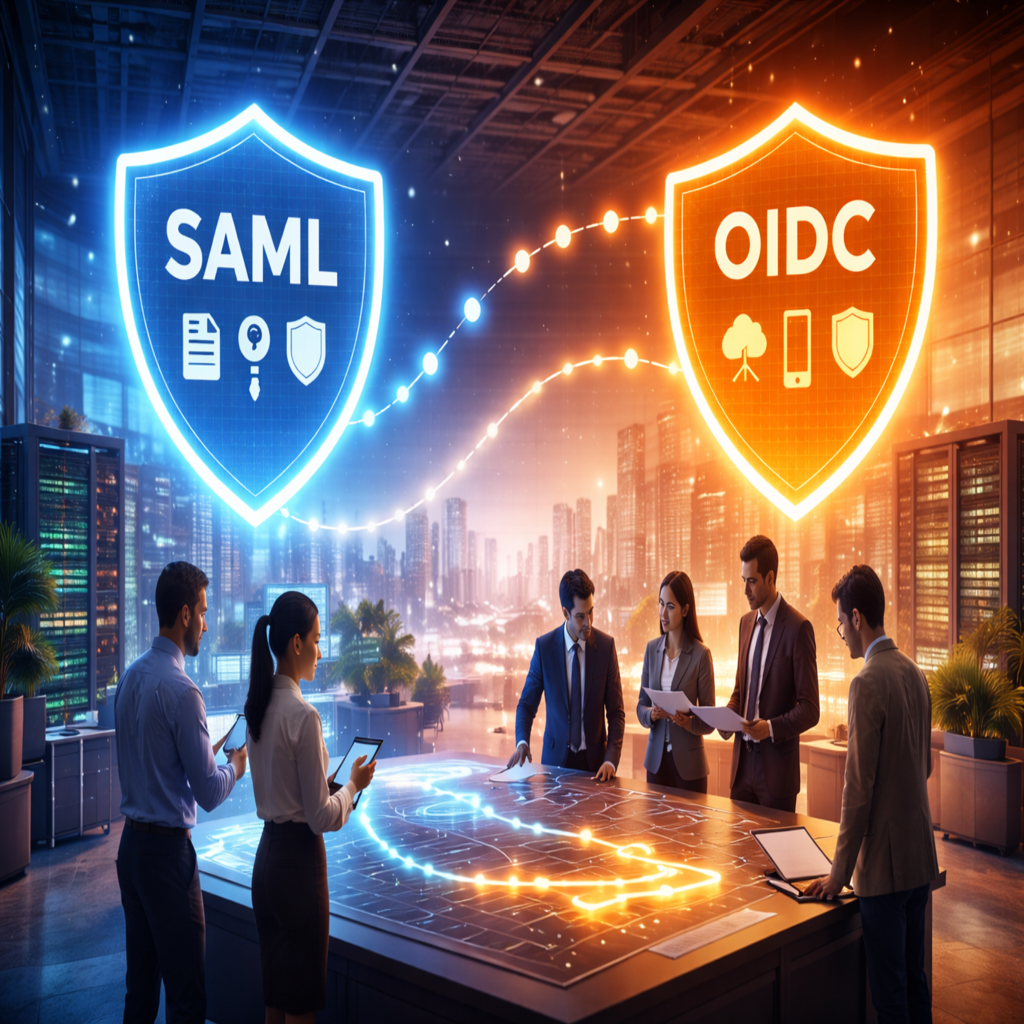
In this model, SAML continues to serve workforce and legacy enterprise integrations, while OIDC becomes the primary protocol for mobile apps, APIs, and new customer-facing experiences. The key is intentional separation. Teams that treat dual-stack as a temporary accident often end up with duplicated logic, inconsistent policies, and higher operational risk.
Successful dual-stack environments centralize identity policy while allowing protocol-specific edges. Authentication rules, risk signals, and user lifecycle management stay consistent, even though the federation protocol differs.
This approach allows gradual migration without forcing enterprise customers into rushed changes they’re not ready to make.
Certificate Rotation, Downtime, and Hidden Risk
One of the most underestimated differences between SAML and OIDC is operational risk. SAML certificate rotation is still a leading cause of identity-related outages. It requires coordination across vendors, customers, and environments — and failures are often discovered only when users are locked out.
OIDC reduces this risk by relying on dynamic key discovery and rotation through well-known endpoints. Keys can rotate transparently without breaking integrations, dramatically reducing downtime risk for SaaS providers.
For platform owners, this difference alone often justifies prioritizing OIDC for new integrations, even when SAML support remains mandatory for enterprise adoption.
The Keywix View: Reducing Risk Beyond the Protocol
Whether you use SAML or OIDC, one truth remains constant: the biggest breaches often happen after federation succeeds. Tokens are issued, identity attributes are passed, and applications store far more sensitive data than they actually need.
Keywix approaches this problem from a protocol-agnostic angle. Through tokenization and unintelligible data techniques, sensitive identity attributes can be protected regardless of whether they arrive via SAML assertions or OIDC tokens.
This means applications don’t need to persist raw identity data at rest. Even if a downstream system is compromised, the exposed data is meaningless without proper context and access. For enterprises running mixed SAML and OIDC environments, this dramatically reduces blast radius and compliance exposure.
In other words, while teams debate federation protocols, Keywix helps ensure that the data itself stays safe, independent of how authentication occurred.
A Practical Way Forward
In 2026, treating SAML as “legacy” and OIDC as “modern” is too simplistic. The smarter approach is contextual. Keep SAML where enterprise network effects, governance models, and stability matter most. Move to OIDC where user experience, mobile access, and API-driven architectures demand it.
Most importantly, design your identity architecture so that protocol choice doesn’t determine your risk posture. With the right abstractions and data protection strategies, migration becomes evolutionary rather than disruptive.
The future of identity isn’t SAML or OIDC. It’s knowing exactly where each belongs — and building a bridge that lets you move at the speed your customers can actually follow.